LEAK DETECTION • Coram, NY
Pool Leak Detection in Coram, NY
Empire Pools provides comprehensive pool leak detection for Coram homeowners — a structured diagnostic visit designed to
identify where the water is leaving (plumbing lines, fittings, skimmer, lights, main drain, equipment pad, liner, or pool shell)
and what the smartest next step is. We don’t guess. We run a methodical sequence: (1) confirm leak indicators vs. evaporation and splash-out;
(2) isolate sections of the system (skimmer/suction, returns, main drain, and feature lines when present); (3) run pressure testing to prove
which line is failing; (4) use dye tracing at likely entry points (skimmer throat, returns, step jets, lights, cracks, faceplates);
and (5) use advanced acoustic listening where appropriate to narrow down underground leak zones.
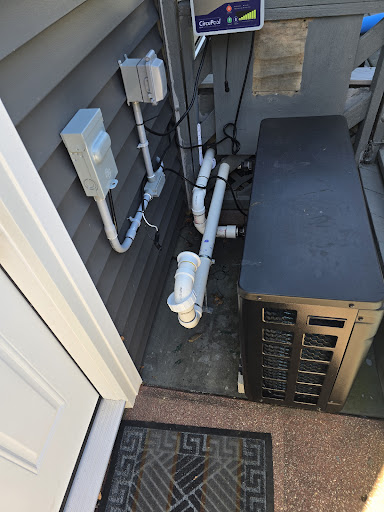
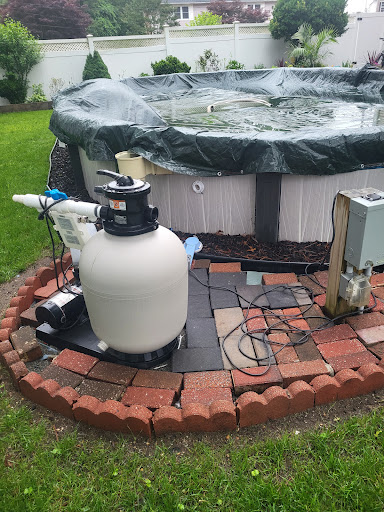
We also inspect the equipment pad for the “quiet leak” stuff that gets missed — unions, valve stems, filter drain plugs, pump lid o-rings,
heater bypasses, chlorinator/salt plumbing, and small seep points that only show under run pressure. If your pool is near
Middle Country Road (Route 25), along
Route 112, close to
Pine Road, around
Furrows Road, near
Coram Plaza, or close to
Pine Ridge Golf Club, we plan access, test sequencing,
and mark-outs around your yard layout and equipment placement. You’ll get clear findings, photos/video when helpful,
and a straight answer on repair options (simple pad fix vs. underground repair vs. liner/shell work).
Learn about leak detection across Long Island.
Coram • Local Insight
Testing Tuned to Coram Properties
In Coram, pools often sit on wooded lots where heavy leaf season and storm runoff can hide early water loss until it becomes a consistent daily drop.
We prioritize fast isolation and pressure testing so we can confirm whether the loss is coming from a
specific line (skimmer, return, main drain) or a structural point (skimmer throat, light niche, liner, fittings).
From neighborhoods near Middle Country Road (Route 25) to properties off
Route 112 and access around
Pine Road and
Furrows Road, we adapt the test plan to your pool type, yard conditions,
and equipment layout — so you get accurate pinpointing, not a generic “maybe it’s the liner” guess.
What’s Included with Coram Leak Detection
- Leak vs. evaporation evaluation (baseline loss check + symptom review).
- System isolation: skimmer/suction, returns, main drain, and features (when present).
- Pressure testing of suspected lines to confirm failure (not a guess).
- Dye tracing at fittings, skimmer throat, returns, step jets, lights, and visible cracks.
- Acoustic (sonic) listening to narrow underground leak zones when appropriate.
- Equipment pad inspection: unions, valves, pump lid/o-ring, filter drains, heater bypasses, and seep points.
- Mark-out guidance and a clear next-step repair plan with priorities.
- Photo/video notes as needed + follow-up recommendations by text.
- Note: Repairs, parts, and excavation are quoted separately after the source is confirmed.
Why Choose Empire Pools for Leak Detection
- Methodical testing sequence that proves the source (pressure + isolation).
- Advanced dye tracing and sonic listening for faster pinpointing.
- Experienced with vinyl, fiberglass, and gunite systems across Suffolk & Nassau.
- Equipment-pad “quiet leak” checks most companies skip.
- Clear repair options before any work starts (no pressure, no upsell).
- Fast text updates with findings and next steps.
- Goal: stop the loss, protect your equipment, and prevent bigger damage.
Starting at $385 + tax
Coram Leak Detection Reviews
★★★★★
“They isolated each line and the pressure test proved the return line was the problem. Clear, professional, no guessing.” — N. Rizzo, Coram
★★★★★
“We kept topping off and didn’t know if it was normal. They found the stopping point and confirmed a fitting leak with dye.” — K. Santoro, Coram
★★★★★
“They found a slow seep at the equipment pad that only showed under pressure. Saved us from digging up the yard.” — J. O’Connor, Coram
★★★★★
“The sonic listening narrowed the zone so we didn’t tear up everything. Honest and thorough.” — M. DeRosa, Coram
★★★★★
“They explained what was urgent and what could wait, and the write-up made repair decisions easy.” — S. Albrecht, Coram
Coram Leak Detection — FAQs
How do I know if my Coram pool has a leak or it’s just evaporation?
If you’re consistently losing more than about ¼–½ inch per day, topping off frequently, or the waterline drops to a repeatable “stopping point”
(like just below the skimmer or a return), it’s usually more than evaporation. We start by ruling out evaporation/splash-out, then isolate
plumbing lines to confirm the source with pressure testing.
What does leak detection cover in Coram?
We evaluate water-loss symptoms, isolate each system section, and use the right tools for the job: pressure testing to prove a plumbing leak,
dye tracing at fittings/skimmers/lights, and sonic listening when underground pinpointing is needed.
We also inspect the equipment pad for “quiet leaks” at valves/unions/o-rings.
Do you check the equipment pad too, or only underground lines?
We check both. A lot of “mystery leaks” come from unions, valve stems,
pump lid o-rings, filter drains, and heater/salt plumbing connections that seep under pressure.
Catching a pad leak early can save you from unnecessary digging.
Can you test pools with heaters, salt systems, spas, or water features in Coram?
Yes. We can isolate auxiliary loops and test feature plumbing/valves. If a spa spillover or feature line is involved, isolation helps confirm
whether the loss is in the main circulation plumbing or a separate loop.
Will you fix the leak the same day?
Sometimes — if it’s a straightforward equipment-pad repair (union/valve/fitting) or an accessible issue. Underground repairs, structural issues,
and most liner-related work are typically scheduled after we confirm the source and outline the best repair path.
What should I do before you arrive for leak detection in Coram?
If possible, don’t add water the morning of. Note the current waterline, keep the equipment pad accessible,
and take quick photos of the pad and the waterline. Also let us know if symptoms started after a storm, vacuuming, closing/opening, heater use, or new features.